EdGate Powers Podcast #6 - with Dr. Michael Rubin
Educational technology is most valuable when it solves a real problem, remains useful over time, and gives students opportunities to develop skills they can carry beyond the classroom. For school leaders, that means looking beyond the newest platform or device and asking harder questions about how technology fits into instruction, whether teachers can realistically adopt it, and whether students are gaining experiences that reflect the world they will enter after graduation. At the same time, schools are being asked to prepare students for a workforce that looks very different from the one previous generations entered, making career-connected learning, durable skills, and emerging technologies increasingly important parts of the conversation.
In this episode of the EdGate Powers Podcast, Rich Portelance speaks with Dr. Michael Rubin, Principal of Uxbridge High School in Massachusetts, about how his school approaches educational technology, student learning, and preparation for life after high school. Rubin shares how Uxbridge evaluates technology based on usefulness, durability, industry relevance, and its ability to give students transferable skills. He also discusses the importance of teacher buy-in and consistency, explaining why schools can create problems when they continually introduce new platforms without giving educators the time and support needed to develop meaningful practices around them.
The conversation also looks at how Uxbridge connects academic and technical education with the skills and experiences students need beyond graduation. Rubin describes the school's approach to embedding critical thinking, collaboration, communication, and other durable skills into coursework rather than treating them as separate subjects. He discusses Uxbridge's efforts to develop a coordinated approach to artificial intelligence, as well as its Innovative Pathways programs, which combine technical coursework, academics, counseling, internships, and capstone experiences connected to high-demand industries. These career-connected opportunities have also contributed to improvements in student engagement, discipline, chronic absenteeism, and failure rates.
In this episode, you will learn:
- How school leaders can evaluate educational technology based on usefulness, durability, and industry relevance.
- Why teacher buy-in and consistency are essential when implementing new technology.
- How schools can avoid constantly changing platforms and creating unnecessary disruption for educators.
- How durable skills such as critical thinking, communication, and collaboration can be embedded into everyday instruction.
- Why schools need a coordinated approach to artificial intelligence rather than allowing technology adoption to happen independently across classrooms.
- How AI can be explored in education while still maintaining appropriate policies and support for teachers and students.
- How career pathways can connect academic learning with technical skills, internships, and future employment opportunities.
- Why authentic, career-connected learning can influence student engagement and ownership of their education.
Why This Conversation Matters
Schools are making technology decisions in an environment where both the tools available to students and the skills employers value are changing rapidly. Simply adding technology to a classroom does not guarantee a better learning experience, particularly when teachers are asked to repeatedly adapt to new platforms or when products have little connection to what students will encounter outside of school. Dr. Rubin's experience offers a practical look at how school leaders can make technology decisions with longevity, instructional consistency, and real-world relevance in mind.
The same principle extends to preparing students themselves. Giving students opportunities to apply academic knowledge through technical coursework, career pathways, internships, and authentic projects can help them understand why their education matters while developing the durable skills they will need across different careers. As AI becomes increasingly present in both education and the workplace, schools have an opportunity to use these technologies as part of that preparation while continuing to emphasize human judgment, collaboration, creativity, and problem-solving.
Join Rich and Dr. Rubin as they explore how schools can make thoughtful technology decisions, give teachers the consistency and support they need, and create learning experiences that connect students with real-world skills and career opportunities. Their conversation offers a look at how educational technology, durable skills, AI, and career-connected learning can work together to prepare students for a changing workforce.
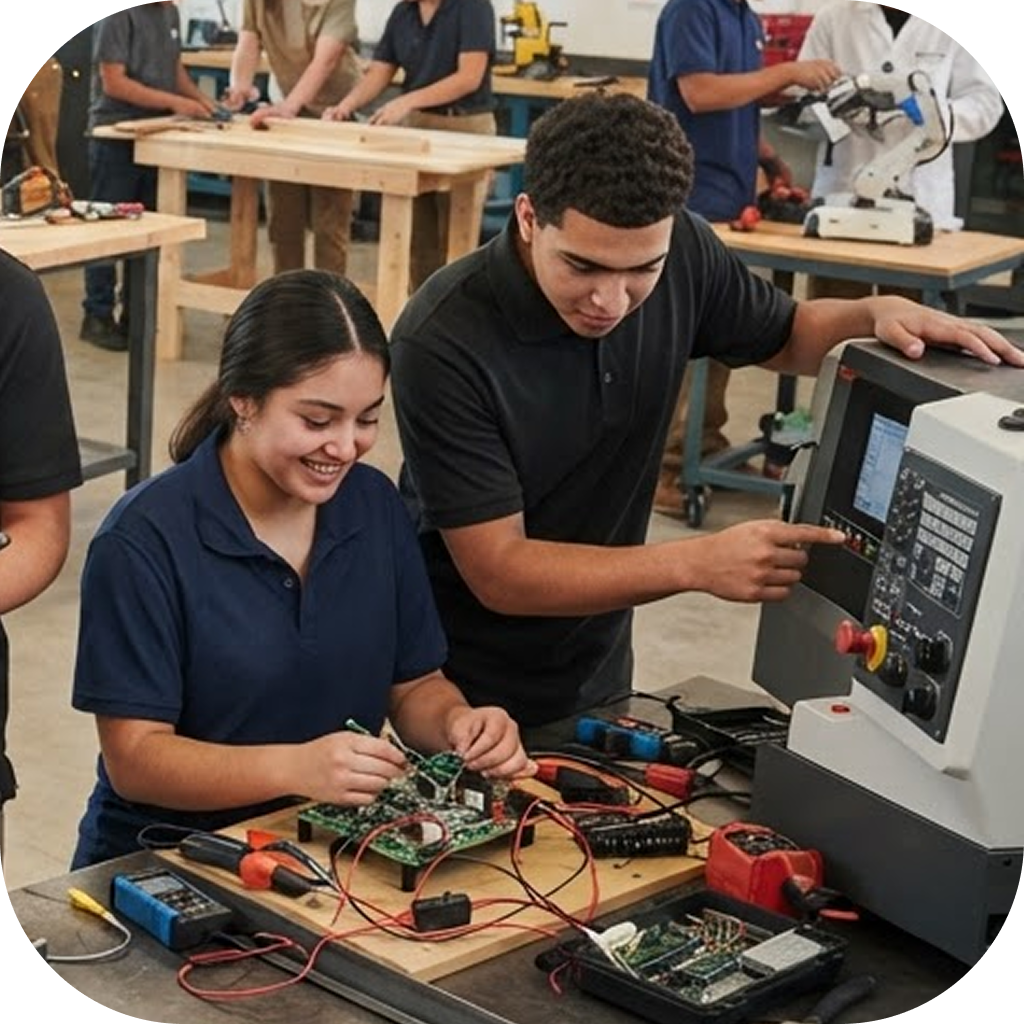
Learn how schools can help students explore potential careers, develop a stronger sense of purpose and ownership over their education, and more.
Now in his ninth year as Principal of Uxbridge High School, Michael Rubin has successfully led Uxbridge High School’s designation as a Commonwealth of Massachusetts Innovation Pathway school, one of the first four schools in the state to earn this distinction. He currently serves as a DESE Peer Ambassador for Innovation Pathways, is chair of the Blackstone Valley Ed Hub Board of Advisors, and is the Massachusetts State Coordinator for the National Association of Secondary School Principals (NASSP). As part of his efforts, UHS was named one of the top five schools in the “Innovation Impact” category at ASU/GSV in 2024. In the past three years, more than 70 schools have visited UHS to learn from the school’s leaders, teachers, and students. He was named Massachusetts High School Principal of the Year in 2020. Mr. Rubin earned his Bachelor's Degree from Brown University and Masters Degree from Bridgewater State University, and he recently completed his doctorate at the University of the Cumberlands.
Rich is passionate about eEdTech and helping people discover pathways to successful careers. He leverages his many years of business experience in strategy, product development, brand creation, and sales & marketing as a frequent industry speaker and sought-after consultant.
Beginning his career in digital marketing and web development, Rich was recruited into the private, independent school market to help usher in digital technologies and social media. During this time, Richard served as a student advisor and was nominated to serve on the CAIS (Connecticut Association of Independent Schools) Technology Commission. In 2012, Rich joined York & Chapel, a brand and digital transformation agency where he began working with secondary and higher ed clients, developing strategies for student engagement and pathway creation. In 2014, Richard founded CareerPath, a SaaS engagement platform. Over the past ten years, Rich has given back to the industry as an advisor to numerous EdTech startups, and generally has had a blast doing what he loves to do — help others succeed.
Questions Answered
During the podcast, we uncover critical information related to how top schools should evaluate technology usage, and how industry partnerships can bring the best out of students.
- What educational technologies has Uxbridge High School implemented, and why?
- How can schools assess technology based on student outcomes and skills?
- How can schools balance academic and CTE standards with durable skills?
- Why should schools rethink traditional approaches to education?
- How can schools integrate AI into education effectively?
- How can educators keep up with rapidly changing technology?
- How do Uxbridge High School Innovation Pathways connect students with careers?
- How is the Uxbridge High School Innovation Pathways model expanding to other Massachusetts schools?
- What else should education leaders consider when rethinking schools?